
The 5 Questions Every Nonprofit Board Report Must Answer
Jul 16, 2026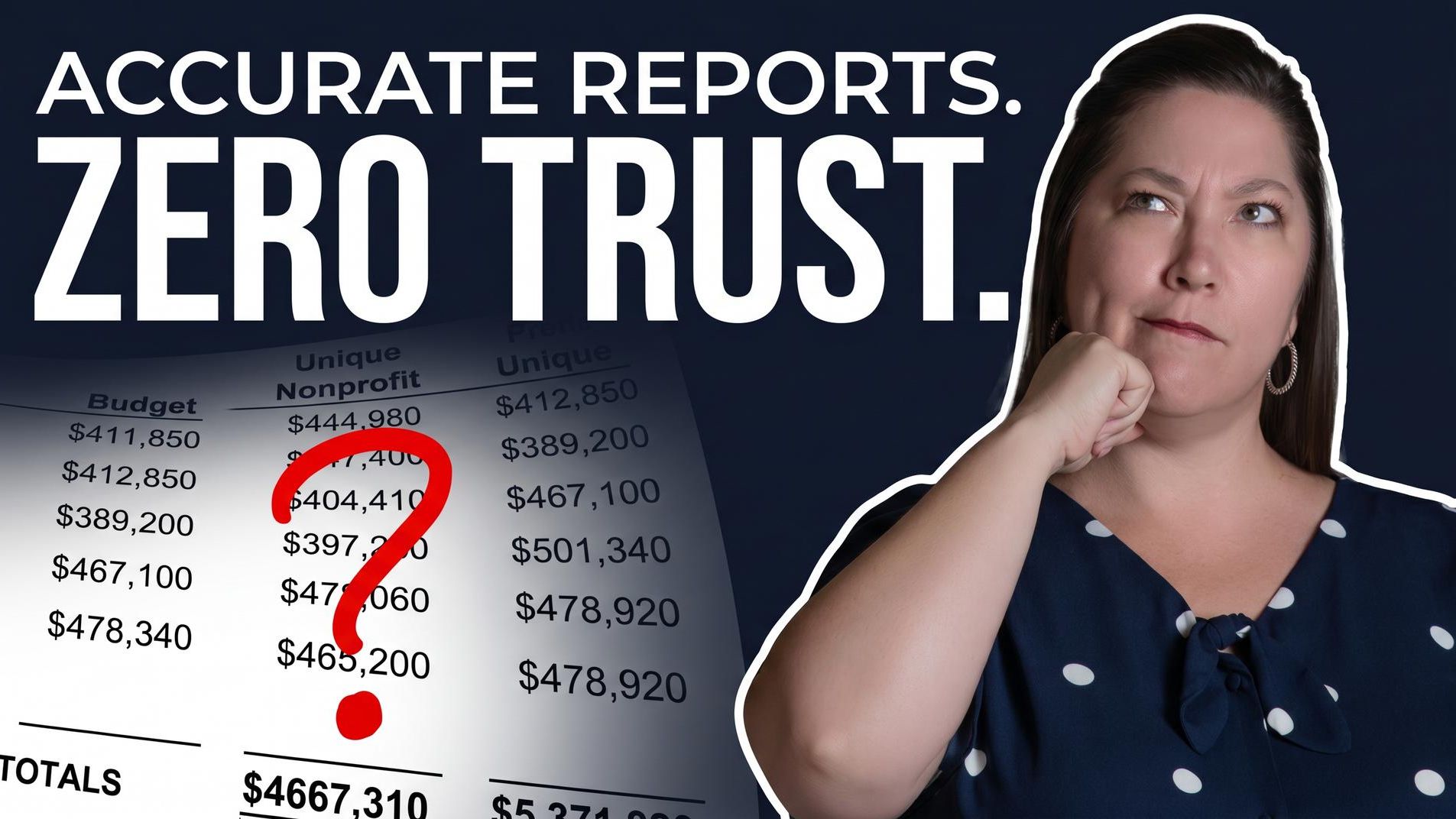

Your Board Report Isn't Building Trust
Your financial reports may be accurate.
They may even be timely.
But if your board still feels uncertain, asks the same questions every month, or struggles to make confident decisions, the problem may not be your numbers.
It may be your reporting.
Because board reporting isn't about delivering information.
It's about building confidence.
And confidence is what allows boards to govern well.
Most Board Reports Were Built for Accountants
Many nonprofit board packets contain:
- Detailed transaction data
- Multiple financial statements
- Account-level information
- Technical accounting terminology
- Dozens of pages of supporting schedules
None of those things are inherently bad.
The problem is that most board members aren't accountants.
They're business leaders, ministry leaders, educators, community advocates, and volunteers who are trying to fulfill their fiduciary responsibilities.
They're not asking, "Did we classify this transaction correctly?"
They're asking much simpler questions:
- Are we financially healthy?
- Are we on budget?
- Are there risks we need to know about?
- Are we making progress?
- Is there anything that requires a decision?
If board members can't quickly answer those questions, the report isn't accomplishing its purpose.
Too often, organizations respond to uncertainty by providing more information. But more information doesn't always create more understanding.
Sometimes it creates the exact opposite.
Reporting Numbers and Reporting Confidence Are Not the Same Thing
A financial statement reports numbers.
A board report should communicate meaning.
That's an important distinction.
Board members don't need to become accountants. They need enough information to govern wisely.
That means helping them understand:
- What happened
- Why it happened
- Whether it matters
- What comes next
A technically accurate report can still leave a board feeling uncertain.
For example, a board may receive an income statement showing that revenue exceeded budget by 8%.
That's helpful.
But it's far more helpful if leadership also explains:
- What drove the increase
- Whether it is sustainable
- Whether it affects future plans
- Whether any action is required
The numbers tell part of the story.
Leadership provides the rest.
What Every Board Member Wants to Know in the First Five Minutes
Over the years, I've found that most board members are trying to answer a handful of questions as quickly as possible.
1. Are We Financially Healthy?
Not every board member understands financial statements, but every board member wants reassurance that the organization is financially stable.
A clear summary of overall financial health goes a long way.
2. Are We Ahead or Behind Budget?
Budget-to-actual reporting should quickly highlight significant variances and explain why they occurred.
Boards should not have to search through multiple pages to find the answer.
3. How Is Cash Flow?
An organization can appear healthy on paper and still experience cash flow challenges.
Board members need visibility into available cash, reserves, and upcoming financial obligations.
4. Are There Emerging Risks?
Every board wants to know what's around the corner.
Are donations trending downward?
Is a major grant expiring?
Are expenses increasing faster than revenue?
Identifying risks early allows boards to make better decisions.
5. Are There Decisions We Need to Make?
The best board reports don't just provide information.
They create clarity around action.
When decisions are needed, board members should know exactly what leadership is recommending and why.
Simpler Reporting Creates Stronger Governance
Many leaders worry that simplifying board reporting means reducing accountability.
In reality, the opposite is often true.
When reporting becomes clearer:
- Board meetings become more productive
- Questions become more strategic
- Decision-making improves
- Accountability increases
- Trust grows between leadership and the board
Instead of spending meeting time deciphering reports, boards can focus on stewardship, strategy, and mission impact.
That's where governance becomes most effective.
Good reporting doesn't eliminate oversight.
It strengthens it.
The Goal Isn't More Reports. It's Better Conversations.
I've seen organizations invest enormous amounts of time preparing board packets that few people fully understand.
I've also seen organizations transform board engagement by simplifying reporting and focusing on the information that matters most.
The goal of board reporting is not to satisfy a governance requirement.
The goal is to equip leaders to make wise decisions.
At its best, reporting creates transparency.
Transparency builds confidence.
And confidence creates trust.
When boards trust the information they receive, they are able to focus less on uncertainty and more on advancing the mission.
That's what great reporting should accomplish.
Moving Forward with Confidence
One of the ways our team of Fractional Nonprofit CFOs serves organizations is by helping transform board reporting from a compliance exercise into a strategic leadership tool.
We work with churches, nonprofits, and private schools to create reporting systems that build transparency, accountability, and confidence at the board level. The result is clearer communication, stronger governance, and better financial decisions.
If you're ready to strengthen board confidence and improve the quality of financial conversations in your organization, start the conversation at thrivenonprofit.com/you.
Sign Up to Receive Financial Tips in Your In Box
We hate SPAM. We will never sell your information, for any reason.